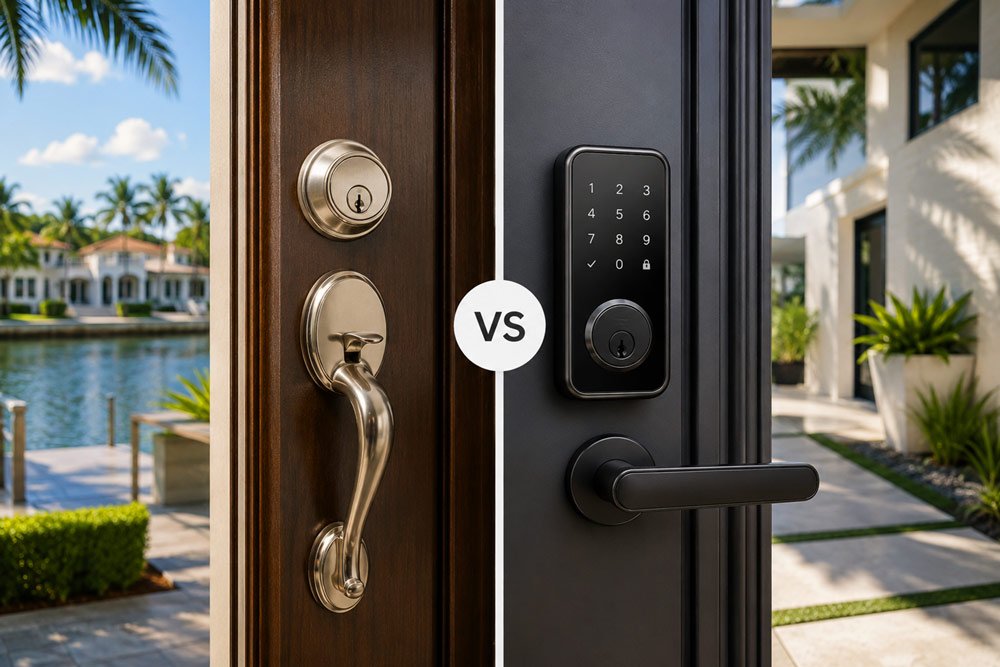
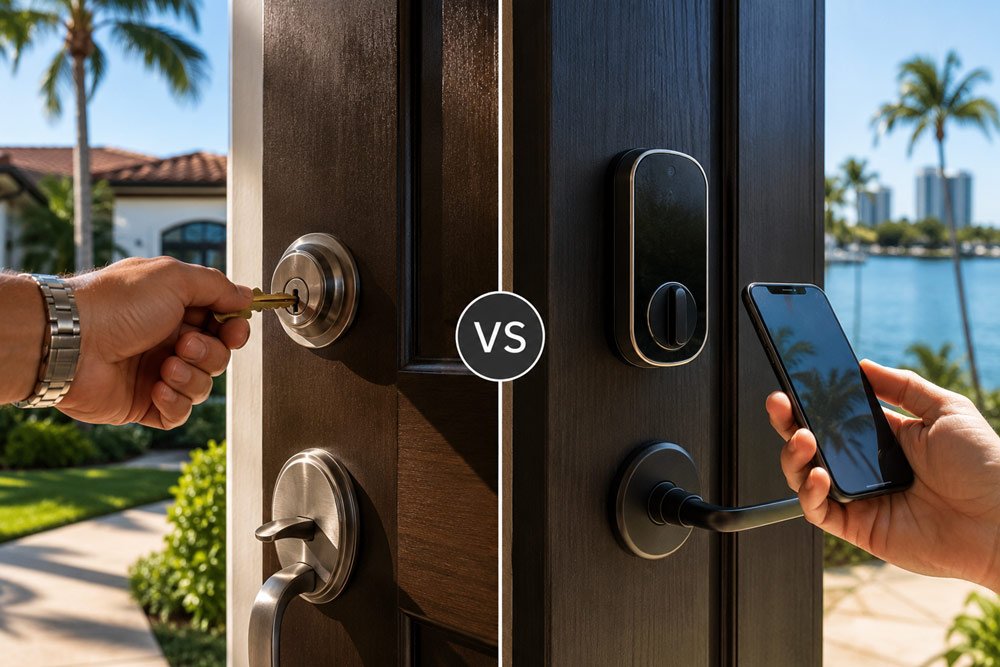
Choosing how to secure your front door used to be simple. You picked a deadbolt, cut a few keys, and called it done. Today, South Florida homeowners face a more interesting decision, and the comparison of traditional locks vs. smart locks is at the center of it. With keyless entry, biometric readers, and smartphone control now widely available, many residents are wondering whether the lock that has protected their family for years still measures up.
This guide breaks down both options in plain language. We will look at how each type works, where each one shines, and where each one falls short, with special attention to the unique conditions of life in Fort Lauderdale and the wider tri-county area. Salt air, humidity, frequent rentals, and a steady flow of visitors all shape what good home security looks like here. By the end, you will know which approach fits your home, your budget, and your peace of mind, and you will understand when it pays to bring in a professional.
Understanding Traditional Locks and What They Offer
Traditional locks are the mechanical devices most of us grew up with. A pin tumbler deadbolt, a knob lock, or a mortise lock all rely on a physical key that lines up internal pins to allow the cylinder to turn. There are no batteries, no apps, and no software updates. You insert the key, you turn it, and the door opens or locks.
That simplicity is a genuine strength. A quality mechanical lock can last for decades with almost no maintenance. It never loses signal, never runs out of power, and never needs a firmware patch. For homeowners who value reliability above all else, this is hard to beat.
The trade off is convenience and control. Physical keys can be copied, lost, or handed off without your knowledge. If a former tenant, contractor, or house guest still has a key, your only real fix is to rekey or replace the lock. Traditional locks also offer no record of who came and went, which matters more for some households than others.
Where Traditional Locks Still Win
For many Fort Lauderdale homes, a set of high security locks paired with sturdy hardware is more than enough. High security deadbolts feature reinforced strike plates, drill resistant cylinders, and key control systems that prevent unauthorized duplication. These upgrades close the most common gaps in mechanical security without adding any electronic complexity. If your priority is dependable, low maintenance protection, traditional locks deserve serious consideration.
The Rise of Smart Locks: How They Work
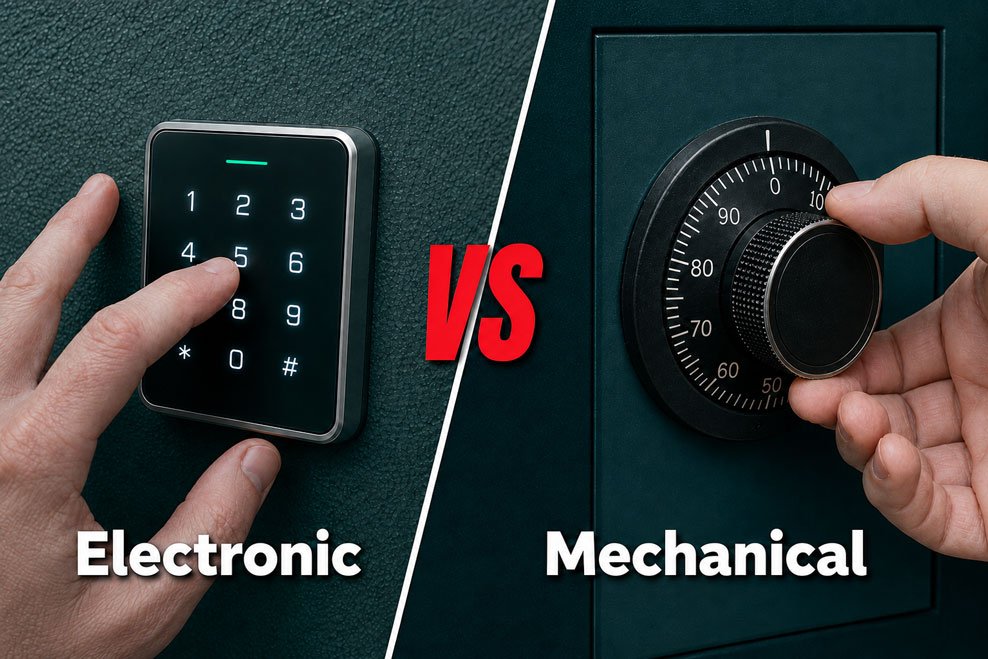
Smart locks replace or supplement the physical key with electronic access. Depending on the model, you might unlock your door with a numeric code, a fingerprint, a smartphone app, a key fob, or a voice assistant. Many models still include a backup keyway, so you are never fully dependent on electronics.
Under the hood, smart locks use a small motor to throw the bolt, controlled by a circuit board and powered by batteries. Connectivity varies. Some use Bluetooth for short range control, while others connect to your home Wi Fi or a smart home hub for remote access from anywhere. The category covers a broad range, from simple digital keypad locks to advanced systems that integrate with cameras, alarms, and lighting.
Common Types of Smart Locks
Keyless lock installation has become one of the most requested upgrades in the region, and the options keep expanding. Digital keypad locks let family members enter a code instead of carrying a key. Biometric lock installation adds fingerprint recognition for fast, key free entry that cannot be shared or copied like a code. Wi Fi enabled models allow remote locking and unlocking, plus alerts whenever the door opens. Each type suits a different lifestyle, and many homeowners mix and match to balance convenience with reliability.
Traditional Locks vs. Smart Locks: A Side by Side Comparison
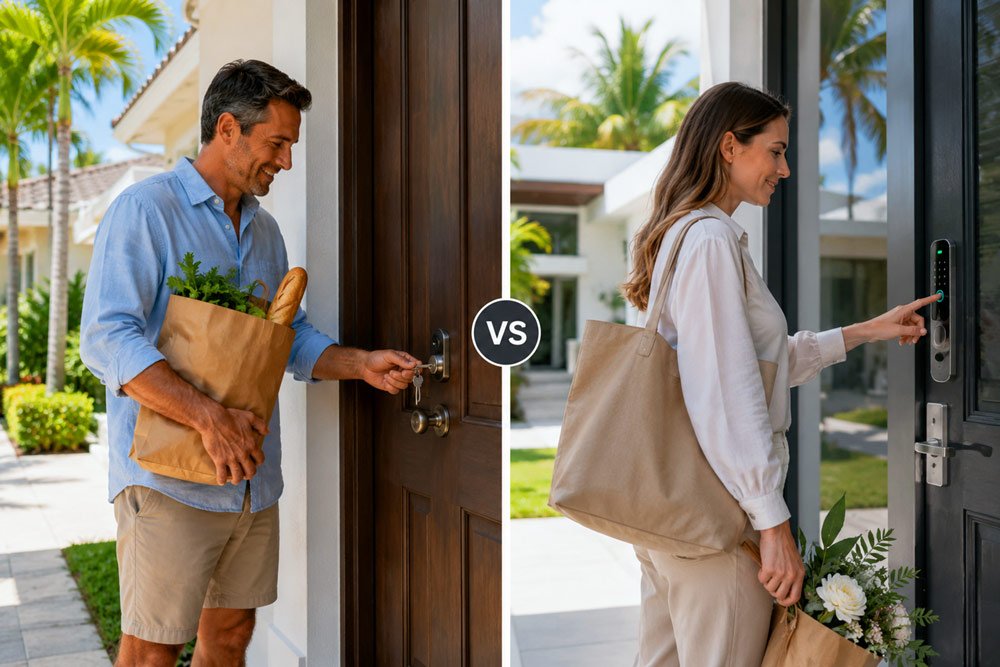
The clearest way to weigh traditional locks vs. smart locks is to compare them across the factors that matter most to homeowners.
Security
Both options can be highly secure when properly installed. A high quality mechanical lock resists picking, drilling, and bumping. A well chosen smart lock adds features like tamper alerts, auto locking, and the ability to revoke access instantly. The weak point for traditional locks is key control, since copies can circulate freely. The weak point for smart locks is the electronic layer, which means choosing reputable brands with strong encryption matters a great deal. In practice, the lock is only as strong as the door, frame, and strike plate around it, regardless of type.
Convenience
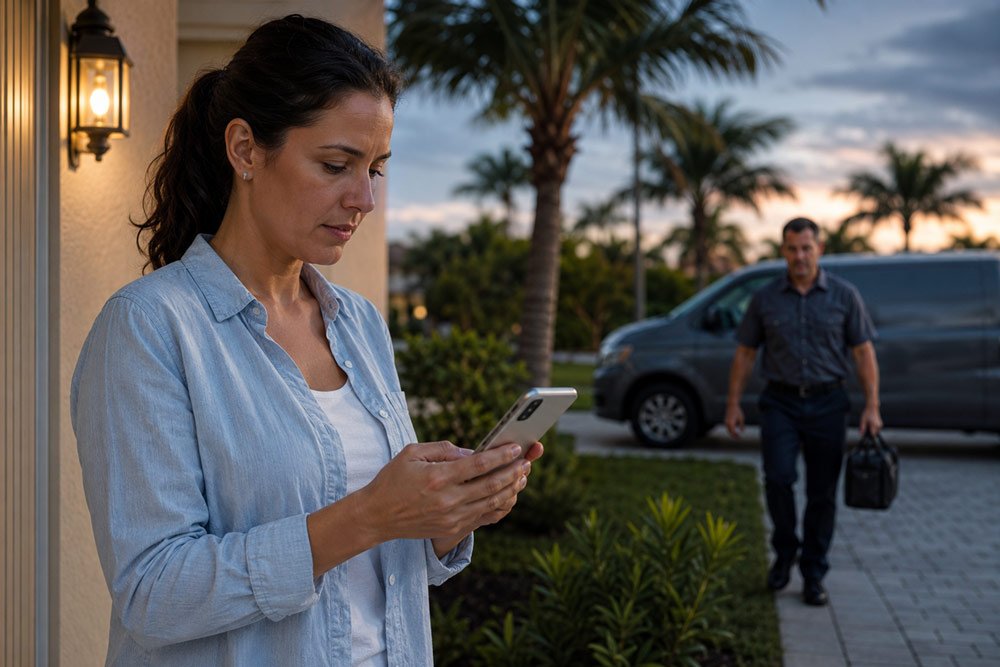
This is where smart locks pull ahead. No more hiding a spare under the mat or rushing home to let in a guest. You can grant temporary access to a cleaner, lock up from your phone after leaving for work, and stop wondering whether you locked the door at all. Traditional locks ask more of you day to day, though many people find the routine reassuring rather than burdensome.
Cost
Traditional locks generally cost less up front and require no ongoing investment. Smart locks carry a higher initial price, and some premium models add subscription fees for advanced cloud features. That said, the gap has narrowed considerably, and a basic keypad lock is now affordable for most households. When budgeting for a lock upgrade in the Miami and Fort Lauderdale area, factor in professional installation to ensure the hardware performs as designed.
Reliability in the Florida Climate
South Florida is tough on hardware. Heat, humidity, and salt air can corrode internal components and drain batteries faster than in milder climates. Traditional locks tolerate these conditions well, which is part of their lasting appeal. Smart locks have improved, but they still depend on batteries and electronics that benefit from weather rated housings and regular checkups. For exterior doors exposed to the elements, this is a real consideration.
Security Considerations for South Florida Homes
Local conditions should guide your decision as much as the features on the box. Fort Lauderdale and the surrounding communities see a steady mix of seasonal residents, vacation visitors, and short term guests. Homes sit empty for stretches during the off season, and many properties have multiple entry points, including patio and pool access.
For frequently vacant homes, smart locks offer a clear advantage. Remote monitoring lets you confirm that doors are secured even when you are out of state, and access logs show exactly who entered and when. For owner occupied homes where the same people come and go each day, a robust set of traditional high security locks may serve you just as well at a lower cost.
Storm season adds another wrinkle. Power outages can disable some connected systems, so any smart lock you choose should have reliable battery backup and a mechanical override. A trusted local locksmith can help you plan for these realities rather than discovering them during the next outage.
High Security Locks and Deadbolts: The Best of Both Worlds
You do not always have to choose one camp or the other. Many homeowners get excellent results by combining approaches. A high security deadbolt on the main entry provides proven mechanical strength, while a smart lock on a secondary door delivers keyless convenience for daily use.
High security locks and high security deadbolts are worth the investment regardless of which path you choose. Look for hardware that carries an ANSI Grade 1 rating, the highest residential standard, along with reinforced strike plates and longer screws that anchor into the door frame studs. These details often matter more than the lock cylinder itself, because forced entry frequently targets the frame rather than the lock. Pairing strong hardware with smart features gives you layered protection that addresses both picking and convenience.
Smart Locks for Rentals, Vacation Homes, and Businesses
South Florida has a thriving short term rental and vacation property market, and smart locks for rental properties have become almost essential for owners who manage turnovers remotely. Instead of coordinating key handoffs, you generate a unique code for each guest that expires automatically at checkout. This eliminates the risk of unreturned keys and saves countless trips across town.
Smart locks for Miami homes and Fort Lauderdale residences serve the same purpose for busy families, letting parents grant access to children, relatives, or service providers without cutting another key. The flexibility is hard to overstate once you have lived with it.
Businesses have even more to gain. Smart locks for businesses and commercial access control across the Miami and Broward markets let owners manage employee permissions, track entry, and lock down a property instantly if a credential is lost. For commercial clients, a coordinated access control system often replaces a drawer full of keys with a single, manageable platform. Whether you need residential coverage or commercial access control, the right system scales to fit the property.
Sliding Doors, Glass Doors, and Other Florida Specific Challenges
The classic Florida home design brings beautiful sliding glass doors, patio entries, and expansive windows. It also brings security challenges that a standard front door deadbolt does not address.
Sliding door locks deserve special attention because the factory latch on many sliders is notoriously weak. Aftermarket sliding door locks, foot bolts, and security bars add meaningful resistance to a common point of entry. Glass door locksmith services can assess whether your patio doors need reinforced locking mechanisms or laminated security film to slow a break in attempt.
Security door installation is another smart investment for many homes here. A reinforced metal security door or storm rated entry adds a physical barrier that complements whatever lock you install, mechanical or smart. The goal is to think about your home as a system rather than focusing on a single lock in isolation.
Best Practices for a Smart Lock Upgrade in the Miami and Fort Lauderdale Region
Once you have decided to modernize your hardware, a few best practices help ensure the project goes smoothly.
First, start with the doors that matter most. The main entry, the door from the garage, and any frequently used secondary door usually deliver the biggest payoff. Second, match the technology to your habits. If you rarely leave town, a digital keypad lock may be all you need, while frequent travelers benefit from full Wi Fi connectivity. Third, do not neglect the supporting hardware. Even the best smart lock fails if it sits in a weak frame, so reinforce strike plates and consider a high security deadbolt alongside any keyless installation.
Finally, plan for power and weather. Choose models rated for outdoor exposure, keep spare batteries on hand, and confirm that your lock has a mechanical or backup entry method. A professional keyless lock installation or biometric lock installation accounts for all of these factors, so the finished product performs reliably for years.
When to Call a Professional Locksmith
Plenty of homeowners are tempted to handle a lock swap themselves, and simple replacements are sometimes within reach. The trouble is that a misaligned bolt, an improperly sized bore, or a strike plate that does not line up can quietly undermine your security without you realizing it. A lock that looks installed is not the same as a lock that is installed correctly.
Professional installation matters even more with electronic hardware. Smart locks require proper alignment, calibration, and network setup to work as advertised. A residential locksmith serving Miami, Fort Lauderdale, and the surrounding communities can recommend the right product for your specific door, install it to manufacturer specifications, and verify that every component works together. For business owners, a commercial locksmith brings the same expertise to access control systems, master key plans, and high traffic entry points. And because lock problems rarely happen at convenient times, access to a 24 hour locksmith in the Miami and Broward area means help is available whenever you need it.
Making the Right Choice for Your Home
There is no single winner in the traditional locks vs. smart locks debate, because the right answer depends on how you live. If you prize simplicity, durability, and the lowest possible maintenance, a set of high security mechanical locks will protect your family beautifully. If you value remote control, shareable access, and entry logs, smart locks deliver convenience that a key simply cannot match. Many homeowners land somewhere in the middle, blending a high security deadbolt at the front door with keyless entry where it adds the most value.
What matters most is making an informed decision and installing your chosen hardware correctly. The best lock in the world cannot protect a poorly fitted door, and even modest hardware performs well when expertly installed in a reinforced frame.
Conclusion
Securing your home is one of the most important investments you can make, and the choice between traditional and smart locks deserves careful thought. Traditional locks offer proven reliability and low maintenance, while smart locks bring convenience, control, and remote access that fit modern South Florida living. For many homeowners, the smartest move is a thoughtful combination of both, anchored by high security hardware and professional installation.
If you are weighing a lock upgrade for your Fort Lauderdale home or business, the team at One Minute Locksmith Services is ready to help. As a family owned, licensed, and insured company serving Fort Lauderdale, Pompano Beach, Boca Raton, and the surrounding communities, we provide expert guidance, quality products, and dependable installation for residential and commercial properties alike. From keyless entry and biometric systems to high security deadbolts and access control, we will help you choose and install the right solution for your needs. Call us today at 954-466-2521 for a free estimate, and let our experts secure what matters most.