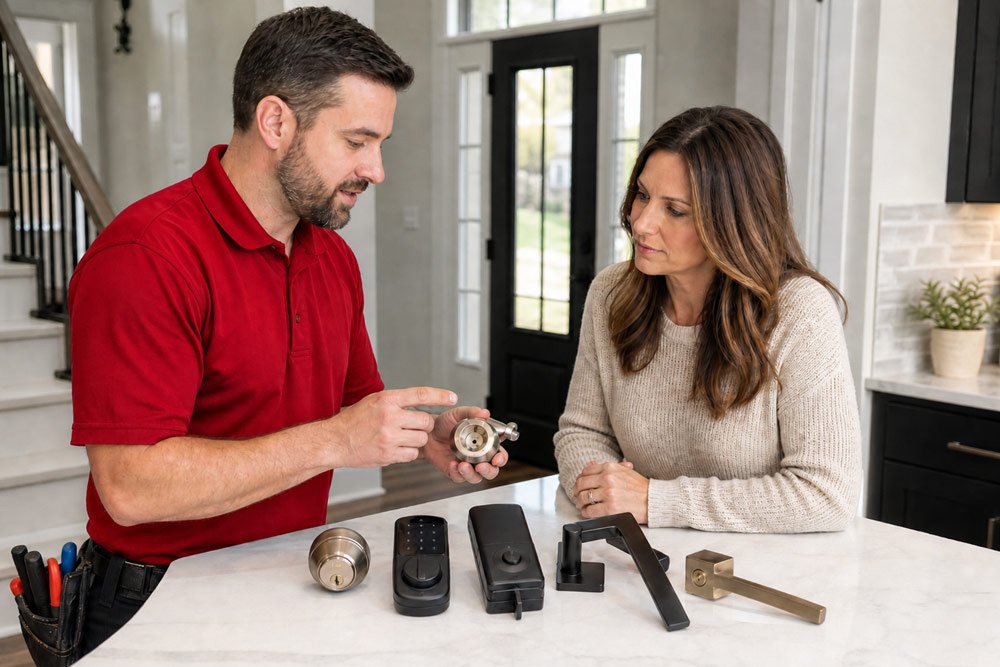
Most break-ins don’t start with a smashed window or a kicked door. They start with a lock that just isn’t built to put up a fight. Builder-grade hardware comes standard on most South Florida homes, and most of it can be defeated in seconds by someone who knows what they’re doing. The good news is that lock upgrades are one of the highest-return security investments a homeowner can make, and you don’t have to spend a fortune or rip your doors apart to do it right.
This guide walks through the lock upgrades that actually move the needle on home security. We’ll cover deadbolts, smart locks, high-security cylinders, door reinforcement, secondary locks, and the upgrade mistakes most homeowners make without realizing it. Wherever it matters, we’ll call out what’s specific to South Florida, where humidity, salt air, and hurricane season add extra demands on hardware that’s already working harder than it should. By the end, you’ll know what to upgrade first, what’s worth the money, and when it makes sense to bring in a professional.
Why Your Front Door Locks Matter More Than Almost Anything Else
Roughly 34 percent of burglars walk in through the front door. Another 22 percent come in through a back or side door. That means more than half of all home break-ins happen at a door, not a window, not a garage, not a roof. The lock on your front door is doing more work than any other piece of security hardware on your property, and most of the time, it’s also the cheapest part.
Builder-grade locks are designed to a price point. They use thinner metal, shorter screws, lower-grade pin tumblers, and weaker strike plates than what serious security calls for. They look fine. They turn fine. They keep an honest neighbor honest. But under any real pressure, like bumping, picking, or a hard kick, they don’t last. A determined intruder can be inside in under 60 seconds.
In South Florida, there’s another wrinkle. Salt air and constant humidity corrode lock internals faster than they would in drier climates. A cheap lock that lasted 15 years up north might start sticking inside three. That’s not just inconvenient. A sticking lock is a vulnerable lock, because homeowners stop fully engaging the deadbolt. Lock upgrades fix the security problem and the longevity problem in the same step.
How Do You Tell a Good Lock From a Bad One?
The fastest way to evaluate a lock before you buy is to look for its ANSI grade. ANSI (the American National Standards Institute) and BHMA (Builders Hardware Manufacturers Association) test residential and commercial locks for durability, security, and resistance to attack, then assign a grade from 1 to 3.
What the three grades mean
Grade 3 is the lowest. Most locks sold in big-box hardware stores are Grade 3. They meet minimum residential standards and not much more.
Grade 2 is a meaningful step up. Grade 2 locks are tested to higher cycle counts, hold up to more force, and resist common attacks better. This is the minimum any front door lock upgrade should target.
Grade 1 is commercial-grade. It’s tested to thousands more cycles, withstands significantly more force, and uses heavier internal components. Grade 1 is overkill on some interior doors but is the right call for any front entry, and it’s increasingly affordable for homeowners.
Look for the grade printed on the back of the packaging. If it isn’t listed, assume Grade 3. Brand alone isn’t enough; the same brand sells locks across all three grades, often with nearly identical-looking packaging. Ignore the marketing on the front of the box and check the spec sheet on the back.
Deadbolts: The Foundation of Door Security
The deadbolt is the single most important lock on any exterior door, and it’s the first one that should get a serious upgrade. A spring-latch lock (the kind in your doorknob) can be defeated with a credit card or a bent piece of metal. A real deadbolt cannot, as long as it’s installed properly.
What to look for
Throw length. The “throw” is how far the bolt extends into the door frame. Anything under one inch is too short. A solid deadbolt upgrade uses a one-inch throw at minimum, and Grade 1 deadbolts often go longer.
Single cylinder vs double cylinder. Single cylinder deadbolts have a thumb turn on the inside. Double cylinder deadbolts require a key on both sides. A double cylinder is more secure if you have a glass within reach of the inside thumb turn, but it can be a fire safety risk because you need a key to escape. Most South Florida fire codes allow double cylinder for residential, but always check locally.
Pick and bump resistance. Modern attack-resistant deadbolts include security pins, anti-bump pin stacks, and hardened cylinder casings that resist drilling. Look for ANSI Grade 1 plus a UL 437 certification if you want serious resistance.
Reliable brands for residential deadbolt upgrades include Schlage (B-series and Primus), Kwikset SmartKey Plus, and Mul-T-Lock. Stick with these, and you’re already ahead of 90 percent of front doors in your zip code.
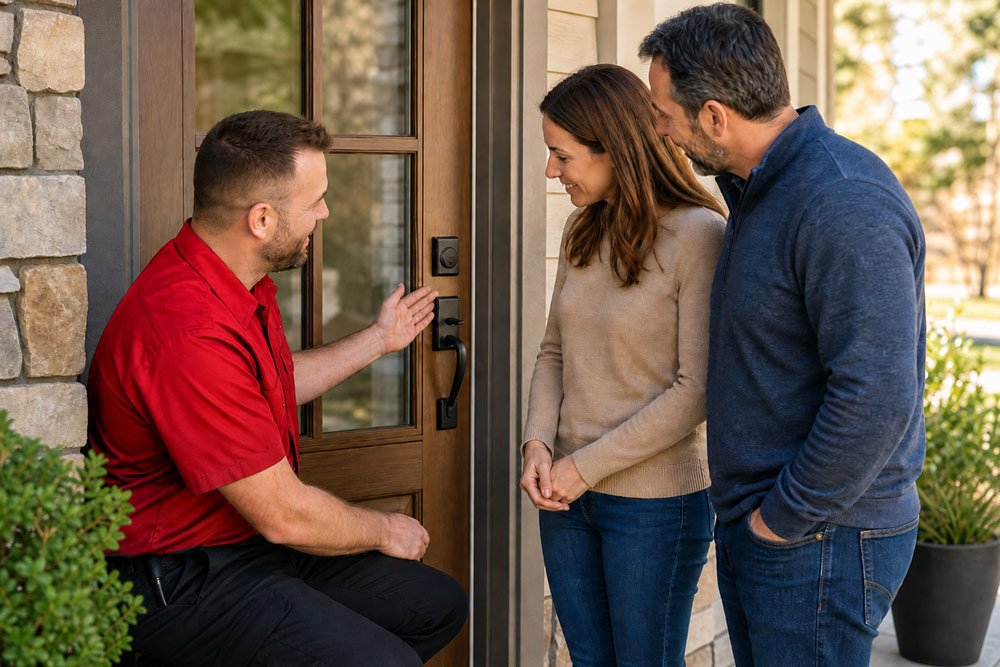
Smart Locks: Real Convenience Without Sacrificing Security
Smart locks have come a long way. Early versions were buggy, drained batteries fast, and often weren’t as secure as the dumb locks they replaced. The current generation is genuinely good, and for most homeowners, a smart lock upgrade is one of the best quality-of-life improvements you can make.
Three smart lock styles to know
Smart deadbolt replacements swap your existing deadbolt entirely. They include touchpads, Bluetooth, Wi-Fi, or all three. Examples: Yale Assure Lock 2, Schlage Encode, August Wi-Fi Smart Lock.
Retrofit smart locks keep your existing deadbolt and add a motorized cap on the inside that turns the thumb turn for you. Your old keys still work.
Connected handlesets combine a smart deadbolt with a fully integrated handle below it for a cleaner look and matched finish.
The honest pros and cons
The upside is real. No lost keys. Audit trails so you can see who came in and when. Remote lock and unlock from your phone. Time-limited codes for cleaners, dog walkers, and contractors. Voice control if you’re already in a smart home ecosystem.
The downsides are also real. Most batteries last six months to a year, and you should never wait for the low-battery warning. Wi-Fi smart locks add an attack surface if your router isn’t secure. And touchpads can fade or stick over time in direct sun and salt air, which matters for coastal South Florida homes. For humidity resistance, look for locks rated IP55 or better, with stainless steel or marine-grade finishes.
High-Security Cylinders: The Underrated Upgrade Most Homeowners Skip
If you’re already going to replace a deadbolt, consider going one level higher and replacing the cylinder with a high-security one. Most homeowners don’t know this category exists, which is exactly why it’s such a strong lock upgrade.
A high-security cylinder uses pins, sidebars, magnets, or other mechanisms that defeat picking, bumping, and most key-duplication attempts. Some require restricted keyways, meaning copies of your key can only be made by authorized dealers with proof of ownership. That alone solves a problem most homeowners don’t realize they have, which is unauthorized key copies floating around from previous owners, contractors, real estate agents, or family members.
The brands worth knowing
The most respected high-security brands include Medeco (especially the Maxum and M3 series, with rotating pins that defeat standard picks), Mul-T-Lock (telescoping pin tumblers and excellent key control), Schlage Primus (an accessible high-security option that fits most existing Schlage hardware), and Abloy Protec2 (used in commercial high-security and sometimes worth it on residential front doors).
These cylinders cost more, often $150 to $300 per cylinder installed, but they’re a one-time upgrade that meaningfully changes the threat profile of your front door. For a homeowner who has already had a break-in or who knows that old keys are unaccounted for, this is the upgrade to do first.
Reinforce the Door, Not Just the Lock
Here’s a hard truth nobody puts on a hardware store box: a $300 deadbolt installed in a hollow door frame with quarter-inch screws can be defeated with one good kick. The lock isn’t what fails; the wood around it is. Door reinforcement is the part of lock upgrades that gets ignored, and it’s often the highest-impact change you can make.
The strike plate upgrade
The strike plate is the metal piece on the door frame that the deadbolt slides into. Stock strike plates are tiny and screwed into the frame with three-quarter-inch screws that bite only into the door jamb. Replace it with a heavy gauge security strike plate that uses three-inch screws driven through the jamb and into the wall stud behind it. This change alone increases kick resistance dramatically. It costs about $20 in parts.
Jamb and hinge reinforcement
Brands like Door Armor and StrikeMaster sell complete jamb-reinforcement kits that wrap a steel sleeve around the entire latch and deadbolt area. They take 30 to 60 minutes to install and effectively make the door frame impossible to split open with a kick. While you’re at it, replace the short factory hinge screws with three-inch screws, and add a hinge security pin if your door has exposed hinges.
If you only have a budget for one upgrade this month, do the strike plate and the three-inch screws. You’ll get more security from $20 of fasteners than from $200 of a fancy lock.
Should You Add a Secondary Lock?
Yes, on certain doors. Secondary locks are not about replacing your deadbolt; they’re about adding a second independent locking mechanism so that an intruder has to defeat two systems instead of one. They’re especially useful on doors that don’t see daily traffic, on sliding glass doors (a major South Florida vulnerability), and in apartments or condos where you can’t modify the primary lock.
Door reinforcement bars, sometimes called security bars or door braces, wedge between the floor and the door at an angle. They’re easy to install, removable, and surprisingly effective. They’re a great option for back doors and overnight peace of mind.
Floor and wall-mounted secondary locks are a second deadbolt mounted directly into the floor or wall plate of the doorway. They’re common on businesses but increasingly popular on residential side and back doors.
Sliding glass door locks are a must in South Florida. Standard sliding glass door latches are notoriously easy to defeat. A simple pin lock through the frame, or a Charley bar laid in the track, makes the door impossible to slide open even if the latch is bypassed. Many South Florida homes have multiple sliders leading to a pool or patio. Every one of them should have a secondary lock.
Window sash locks can be added to single-hung and double-hung windows for under $10 each. Easy DIY, big deterrent.
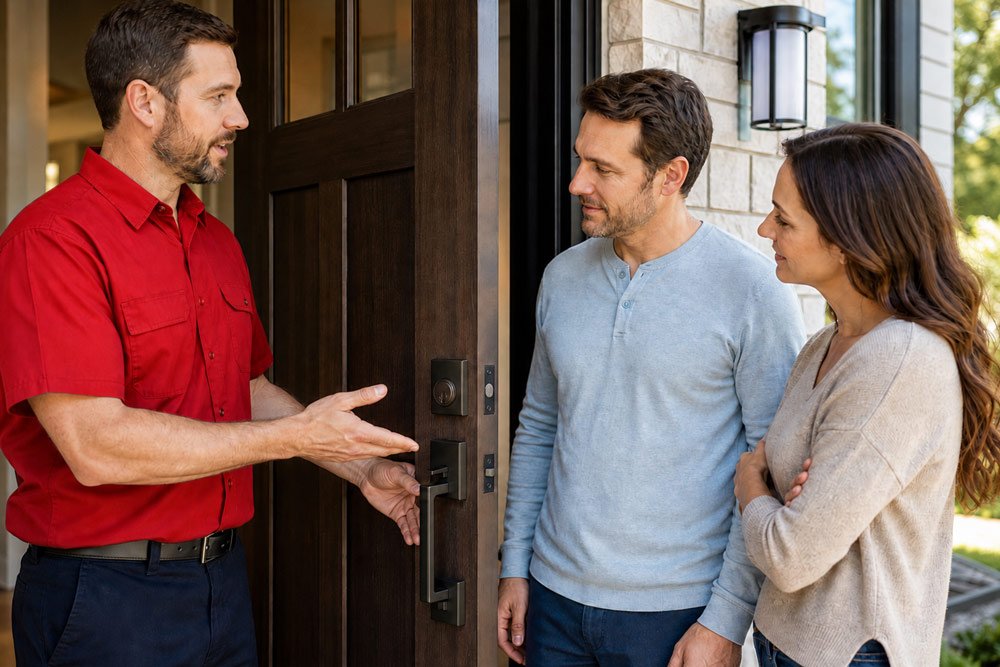
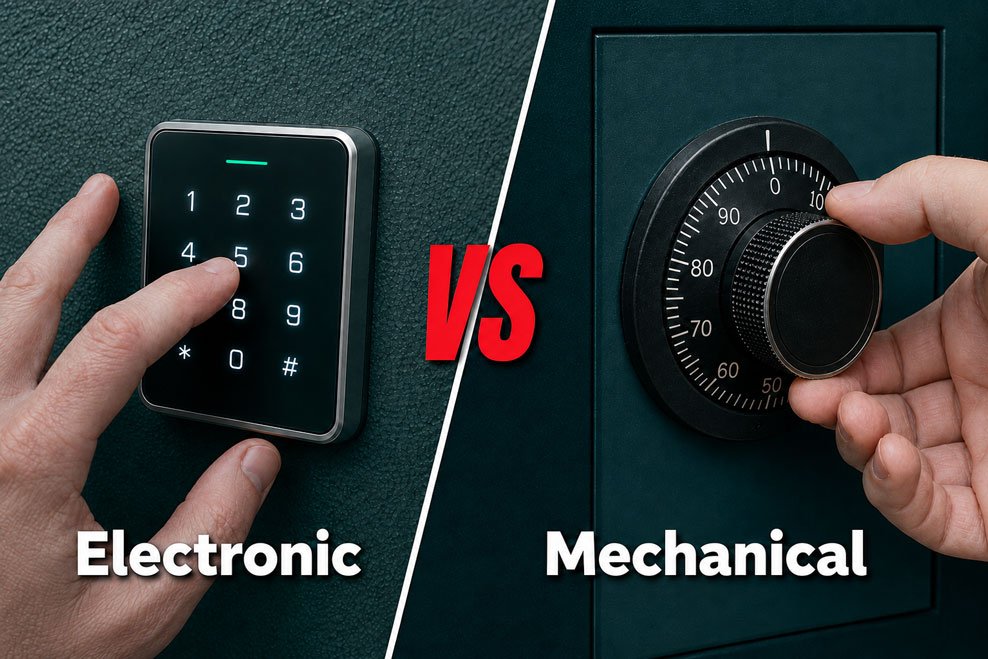
Smart Lock or Traditional Lock: Which Is Right for Your Home?
There’s no universally right answer. The right answer depends on your routine, your household, and your tolerance for technology in everyday objects.
Choose a traditional high-security lock if you don’t want to depend on batteries or apps for entry, you have unreliable Wi-Fi, multiple household members already carry keys without issue, or you live near the coast and want to minimize hardware that fades in salt air.
Choose a smart lock if you frequently let in cleaners, dog walkers, contractors, or guests, you’d benefit from an audit trail (especially in households with kids or aging parents), you travel often and want to confirm the door is locked from your phone, or you simply hate carrying keys.
The hybrid answer. Most modern smart locks include a physical key backup, which means you can have keypad and Bluetooth and app convenience and still get in if the batteries die. For maximum security, use a smart lock with a high-security cylinder behind the keypad. Yes, this is possible, and it’s the configuration most security pros run on their own homes.
Common Lock Upgrade Mistakes Homeowners Make
After enough service calls, patterns emerge. These are the lock upgrade mistakes we see most often, and they’re all easy to avoid once you know about them.
Buying the cheapest lock at the big-box store. Almost every big-box “deadbolt” is Grade 3. The packaging looks identical to higher grades, and most homeowners can’t tell the difference at the shelf. Always check the grade.
DIY installation that misaligns the bolt. A perfectly designed lock with a misaligned bolt is barely better than no lock. If the deadbolt doesn’t slide smoothly into the strike plate, residents stop using it. Either install carefully with a proper boring jig, or hire it out.
Forgetting to rekey after moving in. When you buy a house, you don’t actually know who has keys to it. The previous owners, their cleaners, contractors, family, real estate agents, and earlier owners might all have copies. Rekeying is cheap, takes 15 minutes per lock, and should be the first thing every new homeowner does.
Ignoring back, side, and garage doors. A Grade 1 deadbolt on the front door doesn’t help if the back door has a Grade 3 lock and a hollow frame. Burglars look for the weakest entry, not the most prominent one.
Hiding a key outside. No fake rock fools an experienced burglar. If you need a backup, use a keyed combination lockbox attached to the wall.
Skipping the strike plate upgrade. The single most overlooked, highest-impact piece of any lock upgrade plan.
When to Call a Professional Locksmith
Some lock upgrades are genuinely DIY-friendly. Others benefit from professional installation, both for the security of the result and to avoid expensive damage if something goes wrong.
You should consider calling a pro when you’re upgrading to a high-security cylinder for the first time and want it keyed to a master plan, your door frame needs reinforcement work involving shimming or strike plate alignment, you’ve had a break-in attempt and need a full security audit, you’re managing a multi-door home and want all locks rekeyed to a single key, you’re installing a smart lock alongside a high-security cylinder, or you’re in an apartment or condo and need to confirm what you can and can’t change.
A professional security assessment typically includes a walk-through of every entry point, a review of current hardware grades, recommendations on where to upgrade first, and an installation plan. A good locksmith will tell you what doesn’t need replacing as readily as what does. If everything you hear is “you need to replace everything,” call someone else.
For South Florida homeowners, working with a local, family-owned locksmith means same-day service, hardware that’s chosen for the climate, and someone you can call back if something needs adjustment after installation. One Minute Locksmith Services handles residential lock upgrades across the tri-county area, including same-day rekeys, deadbolt upgrades, smart lock installation, and full home security assessments.
Conclusion: Build a Layered Plan, Not a Wishlist
Lock upgrades aren’t about buying the most expensive hardware on the shelf. They’re about understanding where your current setup is weakest, choosing the right combination of locks, cylinders, and reinforcement to address those weak points, and installing them so they actually do their job. A Grade 1 deadbolt with a $20 strike plate upgrade and a properly rekeyed back door will outperform a $400 smart lock installed in a flimsy frame every time.
Start with your front door. Upgrade the deadbolt to ANSI Grade 2 or better. Add the heavy strike plate with three-inch screws. Then walk the rest of your home and apply the same logic to every entry point: back door, side door, garage entry, patio sliders, and ground-floor windows. The right plan, executed in the right order, dramatically raises the cost and difficulty of breaking in, which is exactly the point.
If you’d like a professional set of eyes on your home’s locks before you start spending, schedule a security assessment with One Minute Locksmith Services. It’s the easiest way to find out what’s actually worth upgrading and what’s already fine.