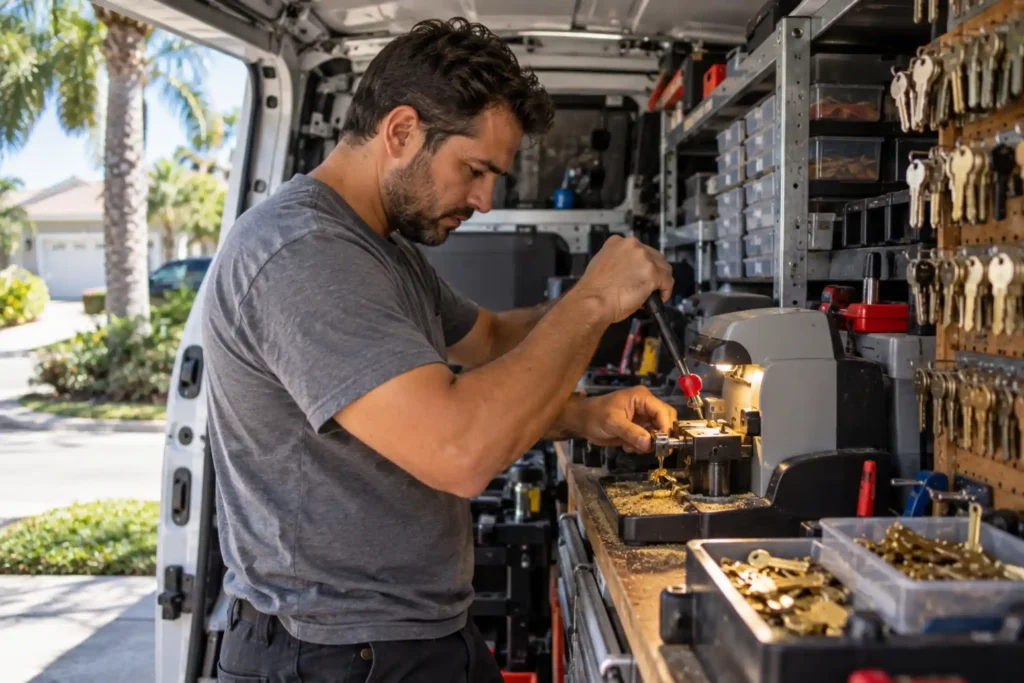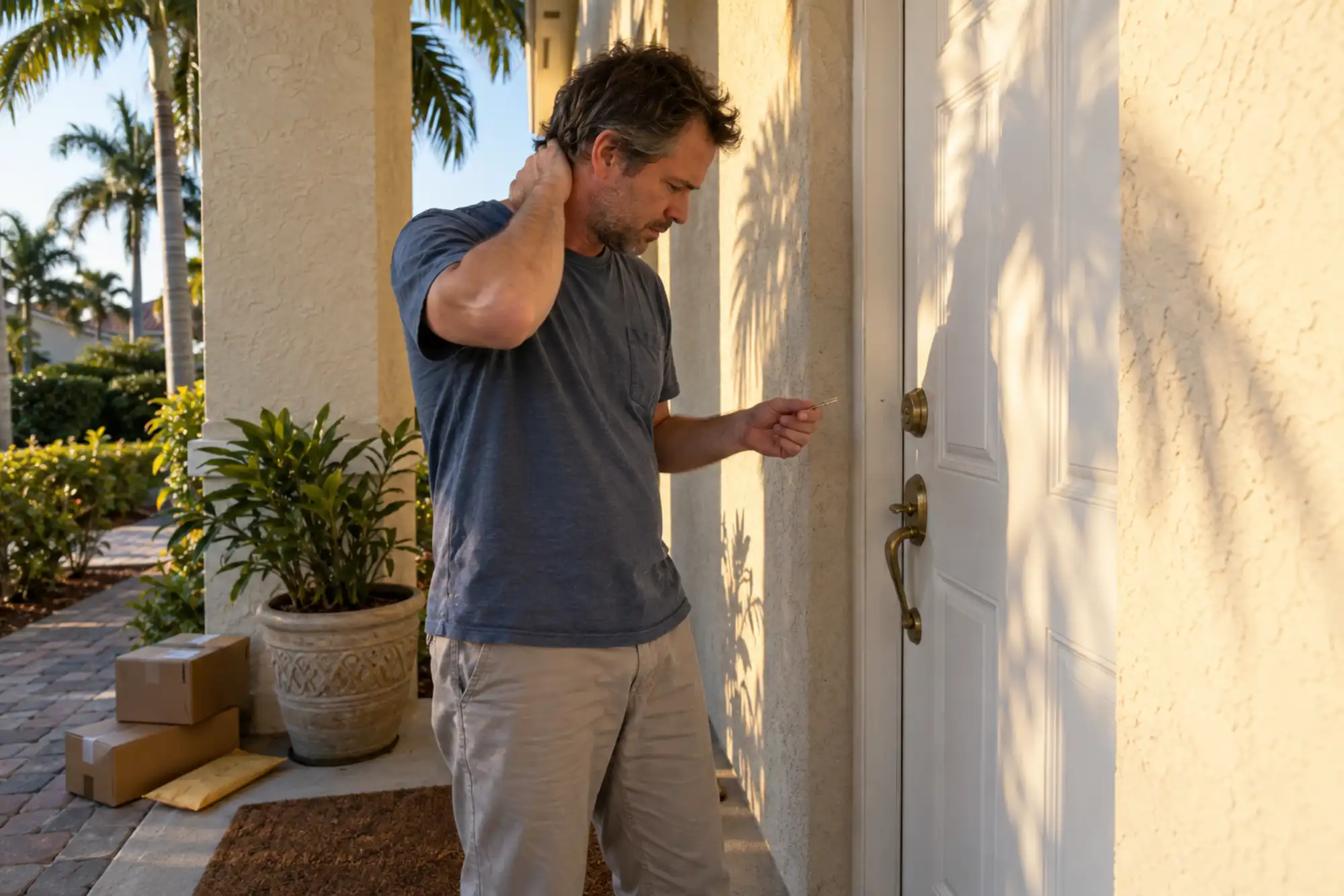
A key that snaps halfway through a turn is one of those small disasters that feels much bigger than it is. You feel the metal give, you pull your hand back, and now there is half a key in your fingers and the other half sitting inside the lock. It might happen at your front door in Fort Lauderdale, at the back entrance of your shop, or in the ignition of your car. Either way, the next few minutes decide whether this is a quick fix or a damaged lock and a much larger bill.
A broken key in lock hardware is rarely a problem with the lock itself. It becomes expensive when people react fast with the first tool they can find. This guide covers why keys break, what to do right away, which household fixes make things worse, and when to call a professional. You will also learn how extraction works, whether the lock needs replacing, and how to keep it from happening again.
One Minute Locksmith Services is a family-owned and operated locksmith company serving Broward and Palm Beach counties, and pulling snapped keys out of locks is a regular part of our week.
In This Article:
- Why Keys Snap Inside Locks
- The First Five Minutes
- Mistakes That Make It Worse
- Can You Remove It Yourself?
- Door Lock or Ignition: What Changes
- How Professionals Extract the Key
- Is Lock Replacement Necessary?
- How to Prevent a Snapped Key
- Broken Key Questions Answered
Why Keys Snap Inside Locks
Keys almost never break out of nowhere. Brass is a fairly soft metal, and every time you push a key in and turn it, the blade flexes a tiny amount. Do that thousands of times and hairline cracks form near the shoulder or at the thinnest cut. One day the metal gives up. In South Florida, humidity and salt air add corrosion to the picture, which makes the lock stiffer and the key weaker at the same time.
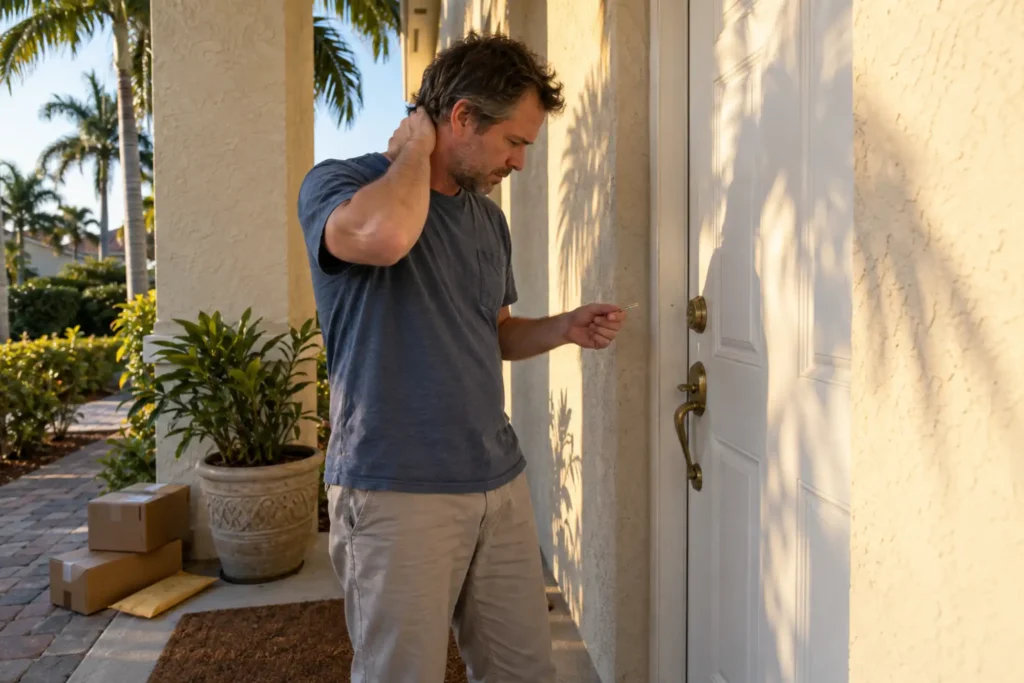
When a key breaks off in a lock, there is usually a history behind it, and knowing it helps you avoid a repeat. These are the causes we see most often:
- A worn key that has been copied from a copy for years, so the cuts are slightly off and the blade is thinner than it should be.
- A dry, dirty, or corroded lock cylinder that forces you to push harder every time you turn.
- A heavy keychain that hangs from the key and twists the blade each time you drive or unlock the door.
- A bent key that someone straightened by hand, which leaves a weak point in the metal.
- A low-quality duplicate cut from soft blank stock.
Where the key breaks matters too. Sometimes the fragment sticks out of the keyway and you can see it clearly. Other times the key snapped off in lock depth, flush with the face or even recessed, and there is nothing to grab. That difference decides which of the steps below are realistic.
The First Five Minutes
What you do right after the snap matters more than anything a locksmith does later. If you find a broken key in lock hardware at your own front door, the instinct is to fix it immediately. Resist that. Slow down and work through these steps in order.
- Stop turning and stop pushing. The fragment is already loose. Any more pressure can wedge it deeper or bend the pins inside the cylinder.
- Look before you act. Use your phone flashlight and check how much of the key is visible. Note whether it sits flush, sticks out, or sits deeper inside.
- Keep both pieces. The part in your hand is valuable. A locksmith can use it to cut a new key quickly, often on the spot. Put it somewhere safe, not in a pocket full of loose change.
- Find your spare key. It will not work while the fragment is stuck, but it is useful once the lock is cleared, and it tells the locksmith what the original cuts looked like.
- Check for another way in. If the broken key is in your front door and you are standing outside, see whether a side or back door is open. If you are locked inside a business, make sure you can still exit safely.
- Call a locksmith. Describe what you see, which lock it is, and whether the door is currently locked or unlocked. That helps the technician bring the right tools.
If the door is still locked and you are outside, you may be dealing with a lockout on top of the snapped key. Our house lockout service handles both problems in a single visit.
Mistakes That Make It Worse
Most of the repair calls that turn into lock replacements started with a good-intentioned attempt to fix it at home. A few of the habits below show up again and again.
Superglue on the Broken Pieces
People often ask, can superglue fix a broken key? In short, no. Glue will not hold under the torque of turning a lock, and if even a small amount seeps into the keyway it can seize the pin tumblers or glue the plug to the housing. A lock jammed with glue usually has to be drilled out and replaced. A key that could have been extracted in minutes becomes a full lock replacement.
Pliers, Tweezers, and Paperclips
Needle-nose pliers, tweezers, and bent paperclips are the first things most people reach for. The trouble is that the keyway is narrow and the fragment is smooth. Pliers slip, a paperclip can push the piece further in, and tweezers tend to scratch the brass pins. Each slip adds damage to the lock cylinder.
Knives, Screwdrivers, and Online Hacks
Prying with a utility knife or a small screwdriver can bend the keyway walls. Hacks that involve gluing a toothpick or a hook to the fragment risk leaving the glue inside the lock. Skip the sprays and oils unless a professional tells you to use one, because they can gum up the pins and make the extraction harder.
Forcing the Lock to Turn
If the fragment is still engaged, it may seem tempting to grip it and turn the lock open. A fragment that is gripped too tightly and twisted can snap again, leaving even less to work with.
Can You Remove It Yourself?
Can you remove a broken key from a lock yourself? Sometimes, but only in narrow circumstances. If a good portion of the key sticks out of the keyway, the lock is a simple one, and you can grip the fragment firmly, a slow, straight pull with small pliers occasionally works. The key word is straight. No twisting, no rocking, no prying.
The picture changes quickly when any of the following apply:
- The fragment is flush with the face of the lock or recessed inside it.
- The lock is a deadbolt, a high-security cylinder, or part of a master key system at a commercial property.
- The key broke in a car ignition, where a transponder chip and the steering column add complications.
- You rent the property, and the landlord is responsible for the hardware.
- You already tried once, and the fragment moved.
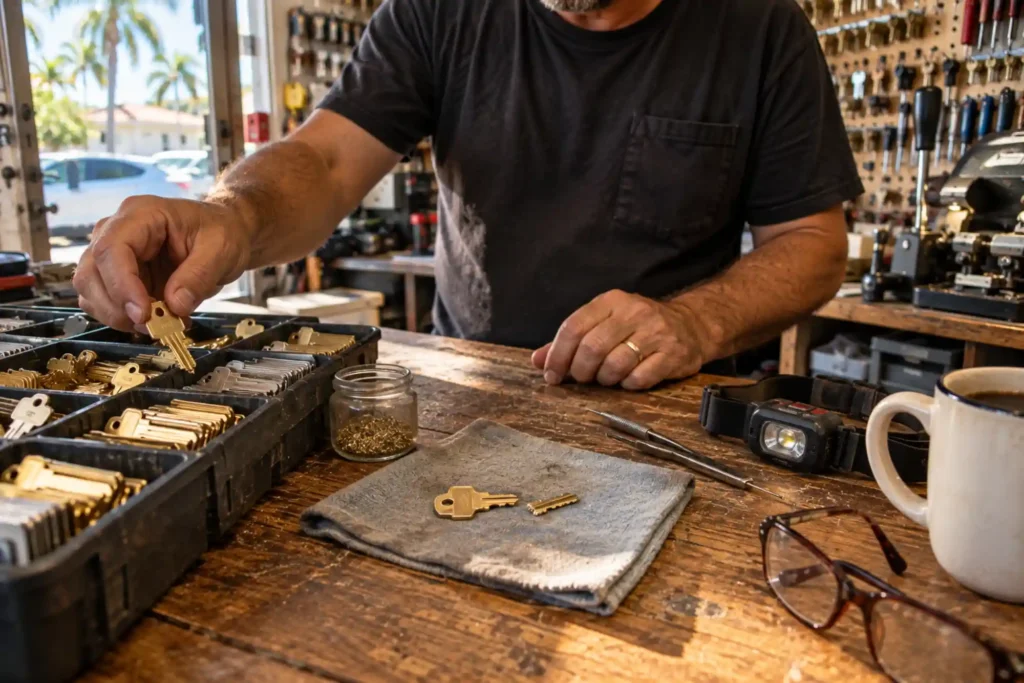
With a broken key in lock hardware, the downside of a failed attempt is far larger than the upside of saving a service call. Weigh the risk honestly. A professional extraction is usually a short visit. A failed home attempt can mean a new cylinder, a drilled door, or a damaged ignition. If you have any doubt, stop and call. A locksmith will always prefer to start with an untouched lock.
Door Lock or Ignition: What Changes
The basic rule of not forcing anything applies everywhere, but the details differ depending on where the key broke.
Broken Key in Door Lock
A broken key in door lock hardware at a home is usually a standard pin tumbler cylinder. These are the most forgiving locks to work on, and extraction rarely harms them. Check whether the deadbolt is thrown. If the door is open and you are inside, you can leave the deadbolt as it is and use another entrance. If the door is closed, your priority is to keep the door secure until the locksmith arrives.
Commercial doors are a bit different. They often use higher-security cylinders, interchangeable cores, or a master key system, so snapping a key there can affect multiple people. Call the locksmith first and let your property manager know before anyone else tries.
Broken Key in Ignition
Many drivers ask what to do if your key breaks off in the ignition. Put the car in park, turn off anything you can, engage the parking brake, and leave the fragment alone. Do not try to start the engine with the remaining piece, and do not force the steering wheel. Modern keys also have a transponder chip in the head, so the replacement must be programmed to the vehicle, not only cut.
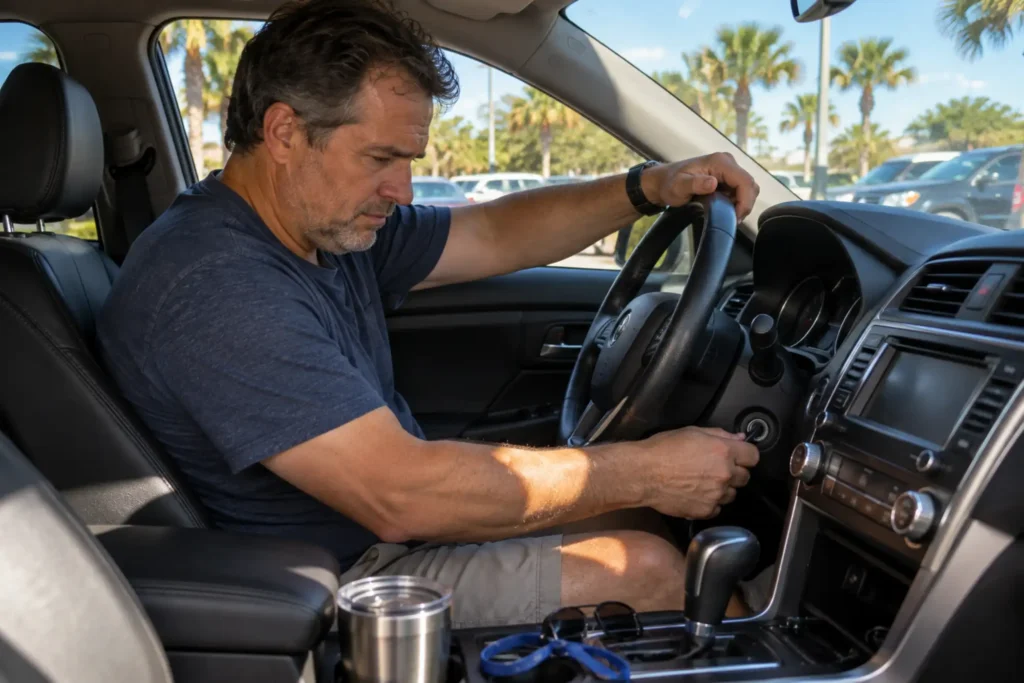
A mobile locksmith can extract the fragment at your location, cut a new key, and program it, which saves you a tow. For related situations, read our guide to common car lockout problems and how locksmiths solve them, or learn more about our car lockout service.
How Professionals Extract the Key
Broken key extraction is a skill built on patience and the right tools. Here is what a typical visit looks like.
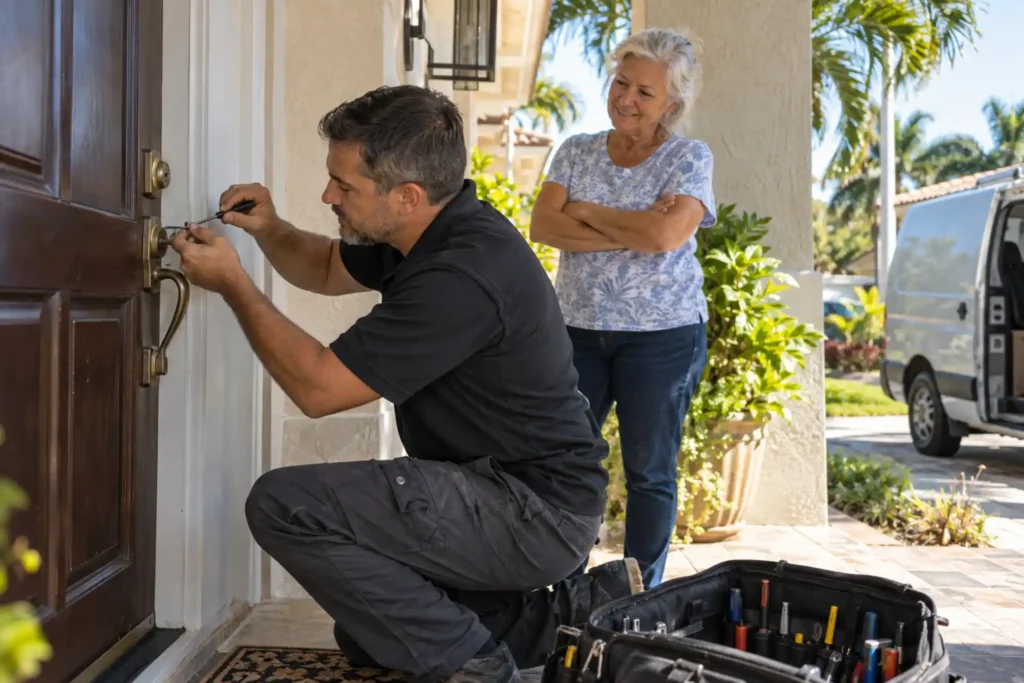
First, the technician inspects the keyway with good lighting and magnification, figuring out the type of lock, how far the fragment sits, and whether the pins or the plug have been damaged. This takes a minute but shapes everything that follows.
Next comes the removal itself. Specialized extraction tools, such as thin hooked extractors and spiral-style pullers, are designed to slide alongside the fragment without disturbing the pins. The technician catches the serrations on the blade, then draws the piece out in one smooth motion. When the fragment sits deep, the cylinder may need to be removed from the door and worked on at a bench, where there is more room and a better view.
Throughout the job, a good technician avoids force. If a tool meets resistance, they stop and change approach rather than push, because the pins and springs inside a lock cylinder are small and easy to bend.
Once the keyway is clear, the technician checks that the pins move freely and the plug turns as it should. Then comes the useful part. Using the pieces you saved, a new key can usually be cut right there. If the original is too worn or damaged to copy, the technician can also create a key from the lock itself.
The whole process is much faster than most people expect, especially when the lock has not been tampered with. If speed is your main concern, see our article on how fast a locksmith can get to you.
Is Lock Replacement Necessary?
Most homeowners think that the lock needs to be replaced as soon as a key breaks. In practice, that is rarely true. Do you need to replace the lock if your key breaks? Not when the fragment is removed cleanly. A well-maintained lock can go back into service the same day with a new key.
Replacement becomes the right call in a few specific situations:
- The cylinder was damaged by prying, glue, or repeated failed removal attempts.
- The lock is old, worn, or corroded enough that another breakage is only a matter of time.
- The other half of the key is missing and could have been picked up by someone else.
- You want to upgrade to a more secure model while the technician is already there.
If security is the concern, rekeying is often a cost-effective middle path. It changes the internal pins so the old key stops working, without buying new hardware. Our guide to lock replacement vs lock repair walks through how to decide between the options.
How to Prevent a Snapped Key
Most breakages are preventable with a few simple habits.
- Make a spare key before you need it. A spare key stored somewhere safe turns a bad day into a minor delay. Always copy from the original, not from an existing copy.
- Replace worn keys. If the cuts look rounded or the blade has a visible bend, retire it. Our key duplication service can cut a fresh one from the original.
- Lighten the keychain. A big bundle dangling from an ignition key puts constant side pressure on the blade and the cylinder.
- Do not use keys as tools. Opening boxes, prying lids, and scraping paint all weaken the metal.
- Treat a sticky lock as a warning. If a key suddenly needs force to enter or turn, have the lock serviced before the key gives out.
- Never straighten a bent key. It almost always breaks at the bend soon afterward.
Fifteen minutes of attention now can spare you an emergency call later. It also helps to know who you would call before something goes wrong. Save our number in your phone, and keep a spare key with a trusted neighbor or family member, not hidden under the doormat where everyone checks first.
Broken Key Questions Answered
What should I do if my key breaks off in the ignition?
Stop, put the car in park, set the parking brake, and do not try to start it or pull the fragment with tools. Keep any broken piece you can reach. Call a mobile locksmith, who can extract the fragment and cut and program a new key at your location.
Can you remove a broken key from a lock yourself?
Only when a good grip on the fragment is available and it comes out with a straight pull. If it is flush, recessed, or in a high-security lock, trying yourself risks damage to the lock cylinder. Calling a locksmith first is the safer choice.
Do I need to replace the lock if my key breaks?
Usually not. Once the fragment is extracted without damage, the lock can keep working with a new key. Replacement is only needed when the lock has been damaged, is badly worn, or the missing half of the key is a security concern.
Can superglue fix a broken key?
No. Glue cannot hold up to the torque of a lock, and if any of it reaches the keyway it can lock the cylinder permanently. Keep glue away from both the key and the lock.
Call One Minute Locksmith Services Before You Try Anything Else
A broken key feels urgent, but the safest next move is often the calmest one. Stop turning, keep the pieces you have, resist the paperclip, and let someone with the right extraction tools take over. Done properly, the lock survives, you get a working key, and the whole situation is behind you quickly.
One Minute Locksmith Services is a family-owned and operated team that helps homeowners and businesses across Broward and Palm Beach counties with snapped keys, lockouts, lock changes, and 24-hour emergency calls. If you have a broken key in lock hardware at home, at the office, or in your car’s ignition, we will come to you.
Call us now at 954-466-2521 or contact us online to get help right away. Not sure which service you need? See our Fort Lauderdale locksmith page, and we will point you in the right direction. Our shop is at 6750 N Andrews Ave STE 200, Fort Lauderdale, FL 33309.