Walk into a locksmith shop in Fort Lauderdale on a busy Tuesday and you might see a rekey job laid out on the bench, a set of transponder keys waiting for programming, and a customer comparing safe lock types before an insurance deadline. None of that happens by accident. Every counter interaction, whether it is a five minute key cut or a two hour commercial rekey, follows steps that most customers never see. This article walks through what actually goes on at a Fort Lauderdale locksmith shop, starting with the first question asked at the counter and ending with the paperwork that follows a finished job. It also covers a topic that comes up more than people expect: safes. Homeowners and business owners across Broward County buy gun safes, document safes, and small home safes every year, and the lock on that safe, whether it is a mechanical dial, an electronic keypad, or a fingerprint reader, decides how that safe behaves for the next decade. If you have ever wondered what a locksmith actually does with your keys, your lock, or your safe, this is that answer.
In This Article:
- What happens in the first few minutes at the counter
- Cutting and duplicating keys behind the counter
- Lock installation, repair, and rekeying services
- Safe lock types: mechanical vs electronic
- Liberty Safe lock options and other trusted brands
- Are biometric safe locks reliable?
- Can you change a mechanical safe combination yourself?
- Battery life and maintenance for electronic safe locks
- Choosing the best safe lock for a gun safe
What happens in the first few minutes at the counter
Most visits start with a question, not a diagnosis. A locksmith behind the counter asks what the lock is doing, or not doing, before touching a single tool. Someone locked out of a car gets asked for a driver’s license and proof they are on the registration, since a shop that skips that step is asking for trouble later. Someone rekeying a rental property after a tenant moves out gets asked how many doors need new pins and whether any of the old keys are unaccounted for. A homeowner replacing a broken deadbolt usually gets a quick look at the door itself, since the thickness of the door and the backset of the existing hardware decide which replacement locks will actually fit.
In neighborhoods like Victoria Park, Flagler Village, and the blocks around Las Olas Boulevard, a lot of the housing stock is older, so part of the counter conversation is really about matching a modern lock to a door that was prepped for hardware from the 1960s or 1970s. A newer condo tower downtown brings a different problem: electronic access fobs and keypad entries that have to be programmed to talk to the building’s existing system, not just a key that needs cutting.
None of this takes long. A straightforward job gets quoted on the spot, often within a couple of minutes, because the pricing for common residential and commercial work is not a mystery to anyone who has done it a few thousand times. What takes longer is the paperwork trail for anything involving a master key system or a commercial rekey, since those jobs need a record of who has access to which door.
Cutting and duplicating keys behind the counter
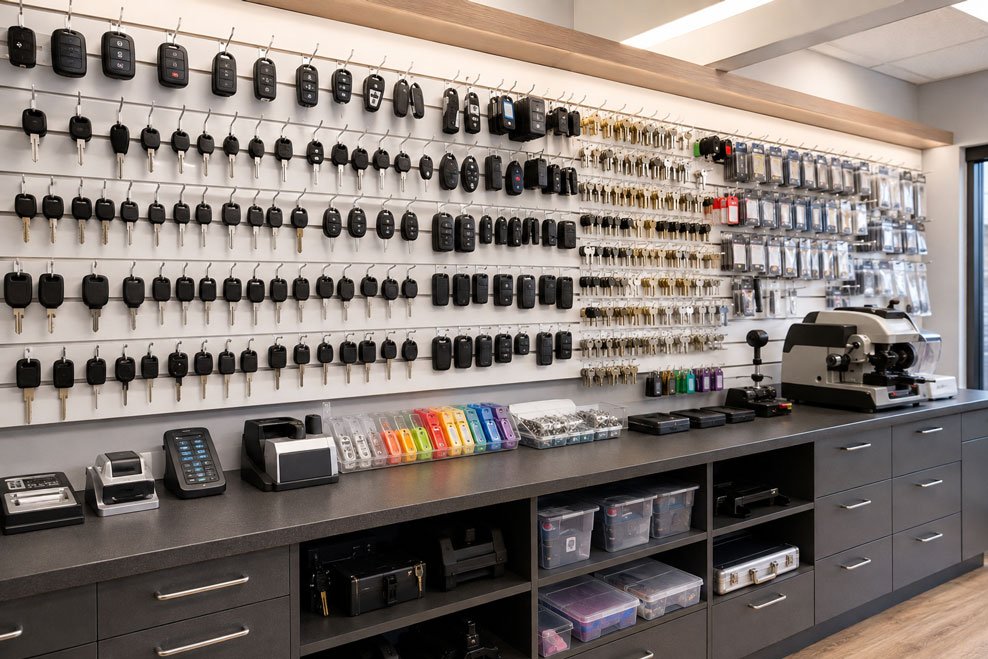
Key cutting looks simple from the customer side of the counter: hand over a key, wait a minute, get two keys back. Behind the counter it is a little more particular. The locksmith checks the blank against the original for the right keyway before the machine ever starts, because a close match that is not an exact match will cut a key that turns stiffly or not at all. Worn keys get special attention, since a key that has been copied from a copy for years drifts further from the original cut depths each time, and cutting from that worn copy just carries the error forward.
High security keys, the ones with side milling or a restricted keyway that only certain shops can cut, get handled differently. Those blanks are not sitting in a rack behind the counter. They get ordered through a registered dealer network tied to the property, which is the entire point of a restricted key system: nobody can walk into a random shop and get a copy made. Once a new key is cut, it gets tested in the actual lock before it goes home with the customer, not just checked against the original by eye.
Blanks come from a handful of large manufacturers, and a shop that sees a steady stream of Fort Lauderdale customers keeps a deep inventory on hand, since a blank for a specific vehicle make and model year is not something most people carry a spare of. Automotive keys add another layer of work: a transponder chip or a proximity fob has to be programmed to the vehicle’s computer after cutting, a step that has nothing to do with the metal cut of the key itself.
Lock installation, repair, and rekeying services
People often use “change the locks” and “rekey the locks” as if they mean the same thing, and a locksmith will usually ask which one actually solves the problem. Rekeying keeps the existing hardware in place and swaps the pins inside the cylinder, so a different key opens the same lock. It is faster and cheaper, and it works well after a breakup, a tenant turnover, or a lost key, when the door hardware itself is fine. A full lock change or lock installation makes sense when the hardware is worn out, does not match the rest of the house, or needs to be upgraded to something like a smart lock or a higher security grade deadbolt. Residential deadbolts carry a grade under the ANSI/BHMA 156.36 standard, from Grade 1 at the top down to Grade 3, the builder grade hardware found on a lot of new construction. A Grade 3 deadbolt is fine on an interior door or a low risk location, but a locksmith will usually steer a customer toward Grade 1 or Grade 2 hardware on a front door or anywhere a lock takes daily abuse.
Repair sits in between the two. A deadbolt that sticks, a lever that will not latch, or a lock that turns but does not retract the bolt usually points to a worn strike plate, a misaligned door, or internal parts that have simply worn down after years of daily use. A locksmith who has seen the same failure pattern hundreds of times can usually tell within a minute of testing the door whether the fix is a five dollar part or a full replacement.
Safe lock types: mechanical vs electronic
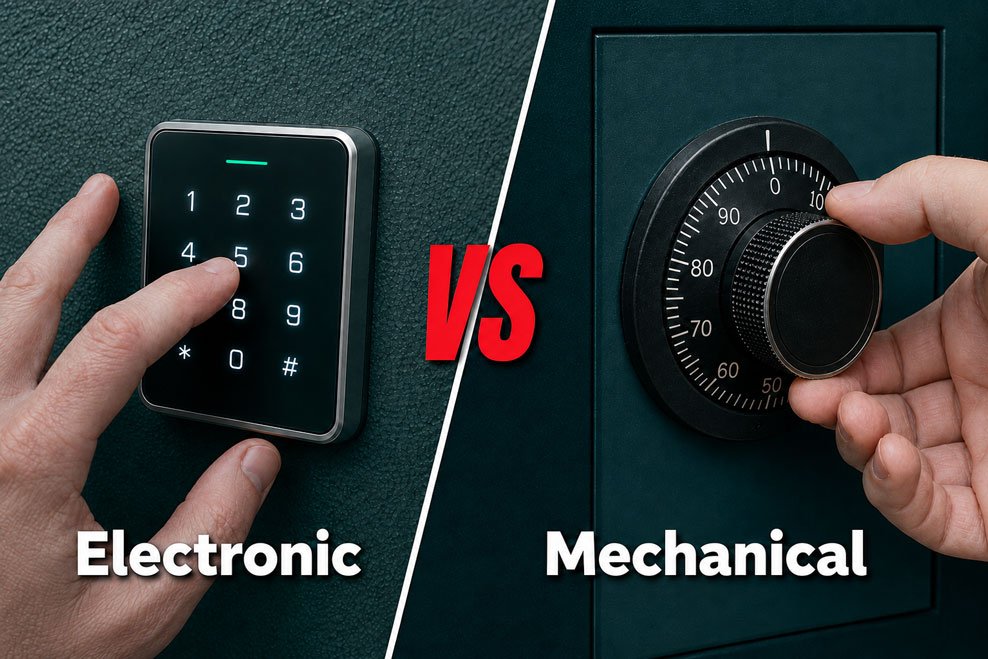
Once the conversation moves from doors to safes, the first real decision is which of the available safe lock types actually fits how the safe will get used. A mechanical dial safe lock uses a series of wheels inside the door that line up only when the dial is turned to the exact sequence set at the factory or by a locksmith, the same basic design that has protected bank vaults for more than a century. There is nothing to charge, nothing to reprogram, and nothing that stops working because a battery ran out at the wrong moment.
An electronic keypad safe lock swaps the dial for a numeric touchpad, so opening the safe is a matter of entering a four to eight digit code and turning the handle. It is faster in a hurry, easier to teach to a family member or an employee, and simple to reprogram if someone who knew the code should no longer have it.
So which safe lock is better, electronic or mechanical? It depends on what matters more to the owner. A mechanical dial is the choice for someone who wants the simplest, most battery free option and does not mind a slower opening process. An electronic keypad is the choice for someone who opens the safe often and wants speed, and who does not mind a small amount of routine maintenance.
Liberty Safe lock options and other trusted brands
When customers ask about Liberty Safe lock options, the answer usually comes down to three tiers depending on the model: a traditional mechanical dial, an electronic keypad, and on some higher end models, a biometric fingerprint reader as a third option. Liberty is one of the more recognized names in the American safe market, and its lineup covers everything from small fire resistant document safes to large gun safes built for a closet or a garage.
Other manufacturers, including Browning, Fort Knox, and SentrySafe, offer similar lock choices across their own product lines, and the decision usually has less to do with brand loyalty and more to do with what the safe will actually hold and how often it needs to be opened. A locksmith who services safes regularly can usually recommend a lock type based on the customer’s daily habits rather than the marketing on the box.
Are biometric safe locks reliable?
Are biometric safe locks reliable? For the most part, yes, though the honest answer has some nuance to it. Fingerprint scanners on safes have improved a great deal over the past several years, and a good scanner today reads a registered fingerprint correctly the large majority of the time, even with a slightly wet or dirty finger. Cheaper scanners on budget safes still struggle more often, especially with fingers that have scars, calluses, or are pressed at the wrong angle.
That is why almost every biometric safe on the market still ships with a backup keypad or a physical key override. A locksmith setting up a new biometric safe will usually register several fingers per user, not just one, and will test the scanner under real conditions: wet hands, work gloves just removed, tired at midnight, rather than a clean test in a showroom. Treated as a convenience feature with a reliable backup rather than the only way in, a biometric lock earns its keep.
Can you change a mechanical safe combination yourself?
Can you change the combination on a mechanical safe dial yourself? In most cases, no, not safely. Changing a mechanical combination involves opening the lock with a special change key, a process that varies by manufacturer and lock model, and getting a single step wrong can jam the lock with the door still open, or worse, closed. This is a job for a locksmith or the factory service department that built the lock, not a weekend project, and most safe manufacturers say the same thing in their own documentation.
Electronic keypad codes are a different story. On most electronic safes, the owner can reprogram their own code by holding a reset button inside the open door while entering a new sequence, without any special tool. That is one of the real advantages of an electronic keypad safe lock over a mechanical dial: the code belongs to the owner, and changing it does not require a service call.
Battery life and maintenance for electronic safe locks
Electronic keypad safe locks run on batteries, almost always a single 9 volt battery mounted behind the keypad or just inside the door. That one detail worries people more than anything else about switching away from a mechanical dial, so it is worth covering plainly.
What happens if the battery dies in an electronic safe lock
You will not be locked out. Nearly every electronic keypad safe lock on the market has a pair of exposed metal contacts on the outside of the keypad, usually just below the number buttons. Touch a fresh 9 volt battery to those two contacts, and it feeds enough power through to let you enter your code and open the door on the first try. A number of higher end safes also build in a mechanical key override hidden behind a small cover plate, as a second backup. Either way, a dead battery inside an electronic safe lock is a five minute fix, not a locked safe and a call to a locksmith.
How often do safe lock batteries need replacing
Most manufacturers recommend swapping the battery once a year, whether or not the low battery warning has sounded yet. A safe that only gets opened a few times a month can sometimes stretch a battery past that mark, but a business safe that gets opened several times a day for a cash drawer should plan on a fresh battery every six months instead. Writing the replacement date on a sticky note inside the door, or setting a yearly reminder on a phone, costs nothing and prevents the one bad morning when the keypad will not respond. A basic alkaline 9 volt battery, the same kind sold at any hardware store or pharmacy, is all these locks need, so there is no reason to hunt down a specialty battery.
Choosing the best safe lock for a gun safe
The best safe lock for a gun safe usually comes down to one trade off: how fast the owner needs to get inside during an emergency, against how little they want to think about batteries or fingerprints. An electronic keypad or a biometric reader gets the door open in seconds in the dark, which matters if the safe is being used for home defense. A mechanical dial takes longer to work through, especially half asleep at 3 a.m., but it never runs out of power and has fewer moving parts to fail over decades of storage.
Plenty of gun owners split the difference: a primary electronic or biometric lock for daily access, paired with a mechanical key override kept somewhere separate from the safe itself, so a dead battery or a forgotten code never turns into a true lockout. A locksmith who sells and services gun safes regularly can walk through the trade offs for a specific model rather than hand out a generic recommendation.
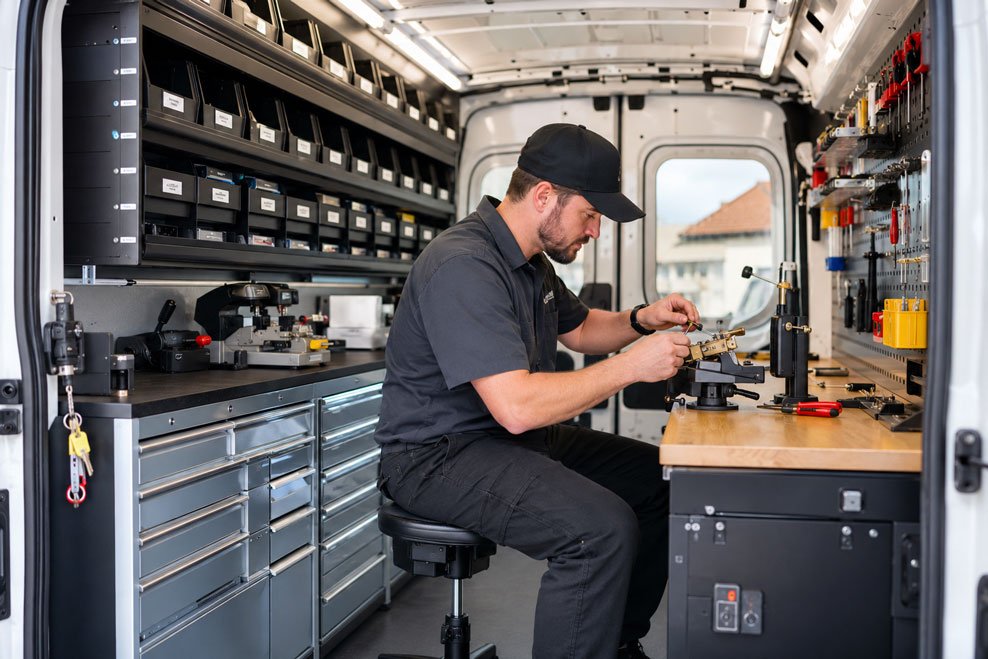
None of this happens in a back room out of sight. It happens at the counter, on the bench behind it, and sometimes on a service call at a house or a business somewhere in Broward County. The tools change depending on the job, a key machine for duplication, pin kits for rekeying, a set of safe manipulation tools for a lock that needs recombining, but the approach stays the same: figure out exactly what the lock or safe needs to do, then do that job correctly the first time.
If you are weighing safe lock types for a new purchase, dealing with an electronic keypad that will not respond, or just need a Fort Lauderdale locksmith shop that can rekey a house after closing on it, One Minute Locksmith Services handles residential, commercial, and automotive work across Broward County, including safe lock service, lock installation, and emergency lockouts. Reach out to One Minute Locksmith Services to get a straight answer on your specific lock or safe before you decide anything.