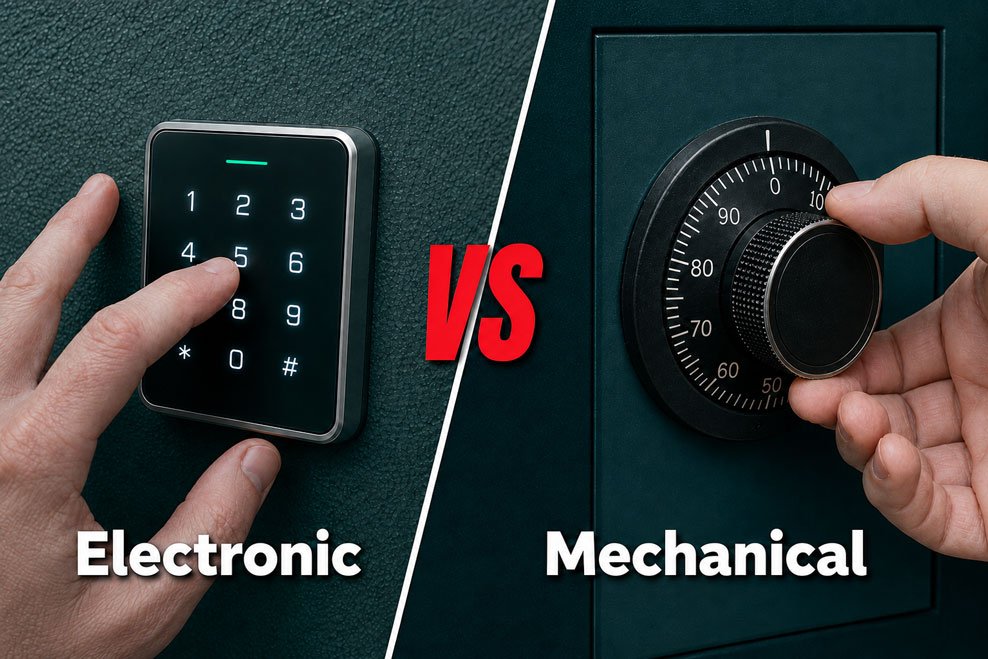
Choosing a safe involves more than comparing steel thickness, fire protection, size, and price. The lock is the part you will use every time you need jewelry, records, cash, firearms, or sensitive business materials. Among today’s most common safe lock types, the decision usually comes down to a traditional mechanical dial and a modern electronic keypad. Both can provide strong security when they are correctly matched to the safe, professionally installed, and built by a reputable manufacturer.
- How Mechanical and Electronic Safe Locks Work
- Mechanical Dial Safe Lock Advantages and Limitations
- Electronic Keypad Safe Lock Advantages and Limitations
- Mechanical vs Electronic Safe Locks: Detailed Comparison
- What Happens When an Electronic Safe Lock Battery Dies?
- Are Biometric Safe Locks Reliable?
- Best Safe Lock for a Gun Safe
- Liberty Safe Lock Options and Upgrade Considerations
- How to Choose the Right Safe Lock in South Florida
How Mechanical and Electronic Safe Locks Work
How a mechanical dial lock operates
A mechanical dial safe lock uses a precisely arranged wheel pack inside the safe door. As the user turns the dial through the correct sequence, each wheel rotates into position. When all gates align, the fence drops and allows the lock bolt to retract. The system does not need a battery, household electricity, wireless service, or software. Its appeal comes from proven engineering and independence from an external power source.
Mechanical operation requires accuracy. The user must turn the dial in the correct direction, pass each number the required number of times, and stop precisely. Overshooting a number usually means starting again. This is easy with practice, but it can be inconvenient for someone with reduced vision, hand tremors, limited dexterity, or an urgent need for access.
How an electronic keypad lock operates
An electronic keypad safe lock accepts a personal identification number through an exterior keypad. The keypad communicates with the secure lock body inside the door, which releases its bolt after validating the code. Quality models commonly add features such as illuminated keys, multiple user codes, penalty lockouts after repeated incorrect attempts, time delays, or access records.
The battery is generally accessible from outside the safe. On many reputable locks, the code is stored in nonvolatile memory, which means the combination is retained when the battery is removed or loses power. This design distinction is important because battery failure does not normally erase the code or permanently seal the safe. Owners should always follow the instructions for their exact lock model rather than assuming that every keypad operates the same way.
Mechanical Dial Safe Lock Advantages and Limitations
Why buyers choose a mechanical dial
- No battery dependency: There is no annual battery task and no low power warning to monitor.
- Proven operating design: High quality mechanical locks have a long history in residential, commercial, and institutional safes.
- Good fit for infrequent access: Slower opening matters less when the safe is opened a few times per month or year.
- No digital code entry surface: There are no keypad buttons whose wear pattern might reveal frequently pressed digits.
Where a mechanical dial can be less practical
Speed is the most obvious disadvantage. Even an experienced owner will generally need more time to dial a combination than to enter a six digit code. Low light can make the markings difficult to read, and a rushed user may repeatedly miss a number. These limitations matter when several employees need frequent access, when a household member has dexterity concerns, or when the safe contains items that may be needed promptly.
Another important question is, can you change the combination on a mechanical safe dial yourself? For most consumer safe owners, the safe answer is no. Changing a mechanical combination typically requires a specialized change key, knowledge of the lock, and careful testing with the door open. Liberty Safe advises that this work be handled by an authorized dealer or licensed locksmith. An incorrect adjustment can cause a lockout, affect the warranty, or create a false sense of security. Use a qualified safe technician or factory authorized service provider.
Electronic Keypad Safe Lock Advantages and Limitations
Why electronic locks are popular
For daily use, electronic locks are hard to beat. Entering a code is fast, intuitive, and usually easier in dim conditions. Authorized users can often change a code without a service call, which is valuable after staff turnover, a household change, a suspected code disclosure, or a change in vendors. Business grade models may also support separate user credentials, delayed opening, dual control, or audit functions.
- Fast access: Keypad entry normally takes only a few seconds.
- User managed codes: Many models allow an authorized owner or manager to update credentials using the manufacturer’s documented process.
- Accessible operation: Large buttons, audible feedback, and backlighting can help users who find a dial difficult.
- Security features: Quality models may impose a temporary penalty period after repeated incorrect codes and may support several authorized users.
What buyers should consider before choosing a keypad?
Electronic locks add a maintenance obligation. Batteries must be replaced with the type and quality specified by the lock manufacturer. Low power, a damaged keypad cable, worn buttons, moisture exposure, or an aging electronic component can interrupt access until the problem is corrected. These risks do not make electronic locks inherently weak, but they make product quality and preventive maintenance especially important.
Mechanical vs Electronic Safe Locks: Detailed Comparison
The most useful comparison is not old technology versus new technology. It is dependable precision versus programmable convenience. The following table summarizes the practical differences buyers should evaluate.
| Decision Factor | Mechanical Dial | Electronic Keypad |
|---|---|---|
| Typical access speed | Slower and requires precise dialing | Fast numeric entry |
| Power requirement | No battery or household power | Usually powered by one or more batteries |
| Code changes | Usually requires a locksmith or factory service | Often manageable by the authorized user |
| Multiple users | Users generally share one combination | Supported on many advanced models |
| Low light use | Dial markings may be difficult to see | Many keypads are illuminated |
| Maintenance | Professional inspection when operation changes or at recommended intervals | Battery replacement plus inspection when alerts or performance changes occur |
| Best suited for | Infrequent access and long term storage | Frequent, fast, or managed access |
Security ratings matter more than lock category
Either category can provide serious protection when the lock is listed for the intended application. High quality electronic safe locks may carry a UL Type 1 listing, while mechanical combination locks may carry an applicable UL group classification. These marks help establish that the lock has met defined requirements. They do not mean every lock of the same broad type is equal, and they do not upgrade the burglary resistance of the safe body itself.
What Happens When an Electronic Safe Lock Battery Dies?
This is the most common concern buyers raise, and the answer is reassuring for most quality installations. If the battery dies, the electronic lock usually cannot retract its bolt until fresh power is supplied. That creates a temporary access problem, not a permanent lockout. On many listed locks, the battery compartment or power contacts are accessible outside the closed safe. The user replaces or connects the specified battery, enters the existing code, and resumes normal operation.
The code generally remains stored. For example, Liberty Safe explains that its Type 1 UL listed SECURAM options keep combinations in nonvolatile memory and place the battery outside for replacement while the safe is locked. Sargent and Greenleaf documentation likewise states that supported electronic models retain stored codes during battery replacement. The exact procedure varies, so keep the model specific manual available somewhere other than inside the safe.
How often do safe lock batteries need replacing?
A quality battery may last approximately 12 to 24 months with typical use, but usage frequency, battery quality, temperature, lock design, and storage conditions influence service life. Liberty Safe recommends a practical preventive schedule of replacing the battery once each year, even if the lock has not issued a low power warning. Choose a memorable date, such as the first weekend of January or the start of hurricane season, and record the change.
Battery maintenance checklist
- Use only the battery chemistry, voltage, brand quality, and quantity recommended by the lock manufacturer.
- Do not mix old and new batteries or different battery types.
- Respond promptly to unusual beeps, dim lights, delayed bolt movement, or other low power signals.
- After replacement, test the code several times with the safe door open before closing it.
- Keep the operating manual, proof of ownership, model information, and service contact outside the safe.
If a fresh battery does not restore operation, stop repeated attempts. Too many incorrect entries may trigger a penalty period, while force applied to the handle can bind the boltwork. A trained locksmith or safe technician can diagnose the battery connection, keypad, cable, internal lock body, handle pressure, and bolt system without immediately assuming the safe must be drilled.
Are Biometric Safe Locks Reliable?
Are biometric safe locks reliable enough for important valuables or firearms? A quality biometric lock can be reliable and extremely fast, but buyers should distinguish a commercial quality fingerprint system from a low cost scanner attached to a light storage box. Sensor quality, enrollment method, user conditions, backup access, lock listing, and the safe’s overall construction all matter.
Fingerprint recognition can be affected by moisture, dust, oil, very dry skin, cuts, worn fingerprints, hand position, and incomplete enrollment. This is relevant in South Florida, where humidity and perspiration are everyday realities, and for tradespeople whose fingerprints may be worn or injured. Enrolling more than one finger per authorized user can improve practical reliability. The reader should be kept clean according to manufacturer instructions.
For a primary safe, select a reputable biometric model that also provides an approved keypad or another secure backup method. Avoid depending on an unlisted scanner simply because it opens quickly during a showroom demonstration. Test authorized fingerprints from natural angles, test the backup method, review false rejection behavior, and confirm what happens after failed attempts. Biometric access is most persuasive when it adds convenience to a sound electronic platform, not when it replaces disciplined security practices.
Best Safe Lock for a Gun Safe
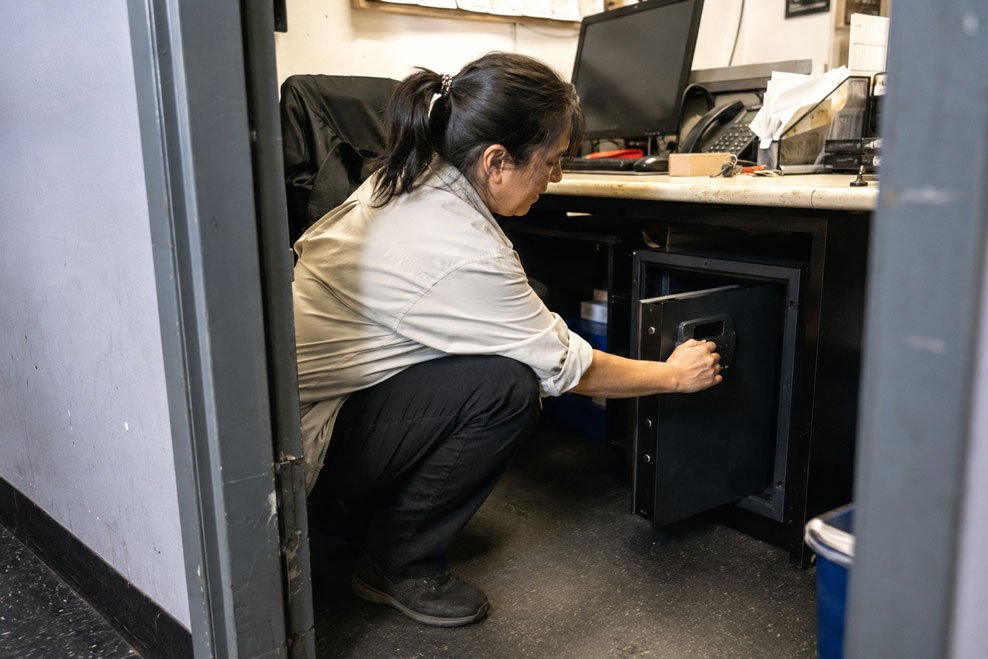
The best safe lock for a gun safe depends on the purpose of the firearm storage. For frequently accessed home defense storage, a high quality electronic keypad or biometric lock with keypad backup is often the practical choice because it reduces access time and can be easier to operate under stress. For a collection safe that is opened occasionally, a mechanical dial offers excellent independence from batteries and may suit an owner who prioritizes long term simplicity.
Access speed should never come at the expense of unauthorized access prevention. A fast lock must still be paired with a robust container, responsible code or biometric management, proper anchoring, and compliance with applicable laws. Never share a code with an unauthorized person, leave a default code active, or hide an override key where it can be easily found. If children are present, evaluate the entire access plan from their perspective, including observed code entry, key location, and whether the safe is secured against removal.
Questions to ask before buying a gun safe lock
- How quickly must an authorized adult be able to open the safe?
- Can every authorized adult operate the lock reliably in darkness and under pressure?
- Does the exact lock carry an appropriate third party listing?
- Is there a secure backup method that does not create an easy bypass?
- Can batteries be replaced from outside, and will the code remain stored?
- Who can service the lock locally if access fails?
Firearm owners should also verify current federal, state, and local storage requirements and any insurer conditions that apply to their household. A locksmith can explain lock operation and installation, but legal advice should come from an appropriate legal authority.
Liberty Safe Lock Options and Upgrade Considerations
Buyers researching Liberty Safe lock options will commonly encounter mechanical, electronic, and selected biometric configurations. Availability varies by safe series, production date, dealer inventory, and lock package. SECURAM electronic options listed by Liberty include outside battery access and nonvolatile combination storage. Certain biometric systems combine fingerprint access with administrator credentials or keypad functionality. Mechanical options remain available for buyers who prefer dial operation.
Do not assume that every lock can be fitted to every safe. Many modern safe locks use common mounting dimensions, and conversions are often possible, but the technician must confirm the safe door design, relocker, boltwork, spindle or cable routing, lock footprint, warranty terms, and compatibility of the replacement. A poorly executed conversion can compromise reliability even when the new lock itself is excellent.
When an upgrade makes sense
Consider changing from a dial to a keypad when frequent access has become frustrating, an authorized user can no longer dial accurately, or business operations require easier code changes. Consider moving from an aging keypad to a modern listed lock when the keypad is unreliable, replacement parts are scarce, access management needs have changed, or the manufacturer recommends replacement. A switch back to mechanical operation may appeal to an owner who opens the safe rarely and no longer wants electronic maintenance.
How to Choose the Right Safe Lock in South Florida
South Florida homeowners and businesses should make the choice through a short risk assessment. This is especially important across Broward, Palm Beach, and Miami-Dade counties, where humidity and storm preparation affect security planning. First, identify what the safe protects and how often it will be accessed. Second, list every authorized user and any vision, dexterity, language, training, or stress related needs. Third, decide whether code changes, separate user credentials, or audit functions are important. Finally, confirm the safe’s location, humidity control, anchoring, and local service support.
Choose a mechanical dial when:
- The safe is primarily for long term or infrequently accessed storage.
- You strongly prefer a lock that does not use batteries.
- Authorized users can dial the combination accurately and consistently.
- You accept professional service when the combination must be changed.
Choose an electronic keypad when:
- You need quick, frequent, or low light access.
- You want to update codes after staffing or household changes.
- Several authorized users need managed access.
- You are willing to replace the battery on a preventive schedule.
Choose biometric access when:
- Speed and ease of entry are high priorities.
- The system is reputable, appropriately listed, and backed by another secure access method.
- Every authorized user can enroll several usable fingerprints and test them reliably.
- You understand that sensor conditions can affect recognition.
Conclusion: Select the Lock That Fits Real Life
The decision between mechanical vs electronic safe locks should reflect daily behavior, not a blanket claim that one technology always wins. Mechanical locks offer proven operation, long service potential, and complete battery independence. Electronic locks offer faster entry, simpler code changes, and useful access management features. Biometric systems can add exceptional speed when the sensor, backup method, and overall lock platform meet a high standard.
Whichever format you prefer, focus on the exact lock model, recognized listing, safe construction, professional installation, preventive maintenance, and reliable local service. Those details determine whether the complete system supports your security goals.
Get Professional Safe Lock Help in South Florida
If you are buying a safe, replacing an unreliable lock, considering a dial to keypad conversion, or dealing with a safe that will not open, contact One Minute Locksmith Services. Our family owned locksmith company helps homeowners and businesses across Broward, Palm Beach, Miami-Dade, and surrounding South Florida communities evaluate security needs and select practical solutions. Call 954-466-2521 to request service or a professional assessment. We can help you protect what matters with a lock solution designed around your property, access needs, and peace of mind.